
Shutting down a water heater safely is two steps in a specific order: cut the energy source, then close the cold water supply. Fuel or power first, because a burner or element that keeps firing into a tank losing its water can damage the unit and create a hazard. Water second, because that is what stops a leak getting worse. There is one situation where neither step applies and the correct response is to leave the building without touching anything — that one comes first, below.
Stop: If You Smell Gas, Do Not Shut Anything Off
A gas odor changes the entire procedure. Do not attempt to shut down the water heater. Leave the building immediately, taking everyone with you. Then, from outside:
- Do not operate any electrical switch — not a light, not an appliance, and not the breaker panel. A switch contact can spark.
- Do not use a phone inside the building, including a mobile. Make the call from outside.
- Do not light anything, and do not attempt to relight a pilot.
- Do not close a garage door with a powered opener on your way out.
- Leave doors open as you go if it does not delay you.
- Call the gas utility or 911 from outside, and stay out until you are told it is safe.
Natural gas is deliberately odorized so it can be detected this way. Treating a gas smell as a troubleshooting problem rather than an evacuation is the mistake this section exists to prevent. Everything below assumes there is no gas odor.
Step 1: Cut The Energy Source
Gas Water Heaters
Find the gas control valve on the front of the unit, near the bottom. It is a dial or knob, usually marked with ON, OFF and PILOT positions. Turn it to OFF. That closes gas to both the burner and the pilot.
Above it there is normally a temperature dial. Some manufacturers direct you to set that to its lowest setting first; the sequence printed on your unit's own label takes precedence over any general instruction, including this one.
There is also a gas shut-off valve on the supply pipe running to the unit, typically within a few feet of it. It closes with a quarter turn, and it is shut when the handle sits perpendicular to the pipe. Closing the appliance control is normally sufficient; the pipe valve is the additional step if the control is inaccessible or you have been directed to use it.
Electric Water Heaters
Go to the electrical panel and switch off the breaker serving the water heater. It is a double-pole breaker — two switches joined together — because these units run on a 240-volt circuit, and it is commonly rated 30 amps. A labelled panel makes this quick.
If nothing is labelled and you cannot identify the right breaker with confidence, switch off the main breaker instead. Cutting power to the whole building is inconvenient and it is unambiguous, which in an emergency is the better trade.
Do not attempt to isolate an electric water heater by any means other than the breaker. There is no safe alternative, and the unit's own thermostat is not a disconnect.
Tankless And Hybrid Units
The same principle applies with an extra detail. A gas tankless unit has a gas control and also needs electrical power for its controls and fan, so both should be shut off. A heat pump or hybrid unit is electrical throughout and shuts off at its breaker. Many tankless and hybrid units also have isolation valves fitted at installation for servicing, which can be used to isolate the unit from the plumbing without shutting off water to the whole house.
Step 2: Close The Cold Water Supply
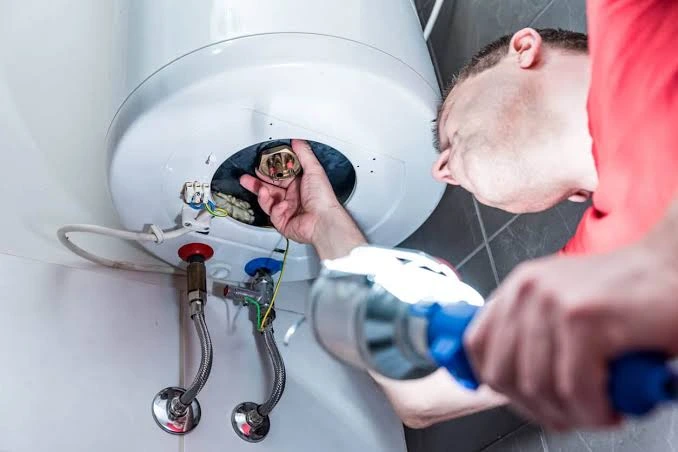
The cold water supply valve sits on top of the unit, on the incoming cold line. Of the two pipes entering the top, the cold one is usually on the right and is the one that feels cool. The valve will be one of two types:
- A lever-style ball valve — turn a quarter turn until the lever sits across the pipe rather than along it.
- A round gate valve — turn clockwise until it stops. These can be stiff if they have not moved in years; steady pressure rather than force.
Closing this stops fresh water entering the tank. The tank stays full — that is expected and correct — but a leak can no longer be continuously replenished from the supply, which is the point.
If there is no valve on the unit, or it will not close, use the building's main water shut-off where the supply enters the property. In an active leak, stopping the water matters more than stopping it neatly.
Unit shut down and water still appearing? Call (717) 500-8528 — service requests are accepted 24/7.
Call For Emergency ServiceWhich Situations Call For A Shutdown
Not every water heater fault needs the unit shut down, and knowing which do saves both panic and unnecessary cold showers.
| Situation | Action |
|---|---|
| Gas odor | Leave the building. Touch nothing. Call from outside. |
| Carbon monoxide alarm sounding | Leave the building. Call from outside. |
| Water flowing from the tank | Shut fuel or power, then the cold supply. Call. |
| Slow drip under the unit | Shut the cold supply. Call the same day. |
| Relief valve discharging continuously | Shut fuel or power. Do not cap the discharge line. Call. |
| Breaker tripping repeatedly | Leave the breaker off. Call. |
| Scalding-hot water at the taps | Shut fuel or power. Call. |
| No hot water, nothing else wrong | No shutdown needed. Diagnose normally. |
That last row matters. Simply having no hot water is not an emergency and does not call for a shutdown — see water heater not producing hot water for how to work through it. The urgent cases are covered on emergency water heater repair in Lancaster, PA.
What Not To Do
- Do not drain the tank as a reflex. The water is hot enough to cause serious scalds and takes hours to cool.
- Do not cap or plug a discharging relief valve. It is the tank's primary over-pressure protection and blocking it is dangerous.
- Do not relight a pilot repeatedly. It went out for a reason — see why a pilot light keeps going out.
- Do not restore gas at the meter yourself if it was shut off there. That is utility equipment.
- Do not stand in standing water to reach an electrical panel or an electric unit.
- Do not run the unit dry. If the tank has emptied, leave the energy source off until a technician has checked it.
Do This Before You Need It
The single most useful thing here is knowing where the two controls are before an emergency, not during one. Ten minutes, once:
- Locate the cold water supply valve on top of the unit and confirm it turns.
- Identify and label the water heater breaker at the panel, or the gas control on the unit.
- Locate the building's main water shut-off.
- Read the shutdown and relighting instructions printed on the unit's own label — they are model-specific.
- Save your gas utility's emergency number in your phone.
A valve that has not moved in fifteen years is exactly the valve that will not turn when it matters. Finding that out on a quiet afternoon is much better than discovering it with water spreading across the floor.
Emergency Shut-Off FAQ
What do I shut off first — the water or the gas?
Cut the energy source first, then the water. A burner or element energised in a tank that is emptying keeps heating with nothing to absorb that heat, which can damage the unit and create a hazard. Shut the gas control to off, or switch the dedicated breaker off, then close the cold water supply valve on top of the unit. The exception is a gas odor — then you shut off nothing and leave.
Where is the shut-off valve on a water heater?
On top of the unit, on the incoming cold line — usually the right-hand of the two pipes, and the one that feels cool. It is either a lever-style ball valve, closed with a quarter turn until the lever sits across the pipe, or a round gate valve, turned clockwise until it stops. If there is no valve on the unit, use the building's main water shut-off.
Should I drain the tank after shutting it off?
Usually not, and not immediately. Draining is a separate procedure for specific reasons — freeze protection or removal — and is not part of stopping an emergency. The water is hot enough to cause serious scald injuries and takes hours to cool. Shutting off fuel and water supply stops the situation worsening, which is the goal.
Can I turn the gas back on myself once the problem is fixed?
Restoring gas and relighting a pilot should follow the printed instructions on the unit's own label, since ignition sequences differ between models. If gas was shut off at the meter rather than the appliance, the utility should restore it. If you shut down because of a gas odor, restore nothing until the utility or a technician has confirmed and cleared the cause.
What if I cannot find the breaker or the gas valve?
Fall back to the building-wide controls. The main breaker cuts power to everything including the water heater; the main water shut-off stops flow to the whole property. Both are blunter than the dedicated controls but they work, and in an active leak stopping the water matters more than stopping it elegantly.
Who do I call for emergency water heater help near me in Lancaster?
For a gas odor, call the gas utility or 911 from outside the building — that comes before any contractor. For a leaking, failed or unsafe water heater, Lancaster Water Heater Pros covers Lancaster City and Lancaster County. Service requests are accepted 24/7, qualifying urgent requests may receive a 90-minute initial-response target when current coverage permits, and same-day appointments may be available. Call (717) 500-8528.