
A pilot light that will not stay lit is almost always one of three things: a flame sensor that is no longer proving the flame, a combustion air path that has clogged, or a flue that is not drafting properly. All three produce the same visible symptom, and they are not equally serious. A worn thermocouple is a routine part replacement. A reversed flue draft is a carbon monoxide question. Working out which one you have is the point of this guide — and the difference matters more than the repair itself.
Before Anything Else: The Gas Odor Rule
If you smell gas, stop reading and leave the building. Do not operate light switches, do not use a phone inside, do not attempt to relight anything. Get everyone out, then call the gas utility or 911 from outside. Natural gas is odorized specifically so that it can be detected this way, and a gas smell near a water heater is not a troubleshooting scenario. Everything below assumes there is no gas odor present.
How The Pilot Safety System Works
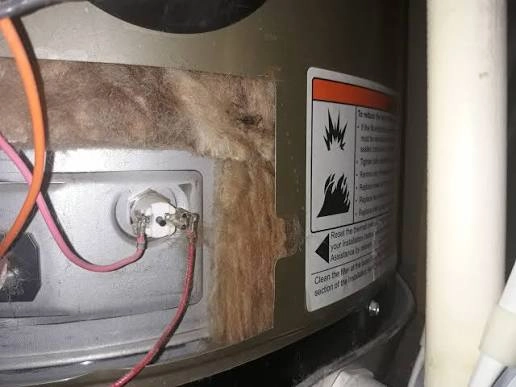
The pilot is not just a flame — it is half of a safety interlock. A flame sensor sits in the pilot flame and converts its heat into a small electrical signal. That signal holds the gas safety valve open. When the sensor stops seeing flame, the signal collapses and the valve shuts, cutting gas to both the pilot and the main burner.
This is why the classic symptom is so specific: you hold the control knob down, the pilot burns fine, you release the knob, and it dies. Holding the knob manually overrides the interlock. Releasing it hands control to the sensor. If the pilot cannot survive that handover, the sensor is not producing enough signal — or the flame it is sitting in is too weak to generate one.
Older units use a thermocouple, a single probe generating a few tens of millivolts. Newer units often use a thermopile, a stack of thermocouples generating enough voltage to run the whole control without external power. They fail the same way and look similar, but they are not interchangeable parts.
The Six Causes, And How To Tell Them Apart
Each cause leaves a different signature. The table separates them by the behaviour you can actually observe.
| Cause | What you observe | Who handles it |
|---|---|---|
| Worn thermocouple or thermopile | Pilot dies the instant the knob is released; flame itself looks normal | Technician |
| Sensor out of position or sooted | Flame does not envelop the probe tip; visible soot or scale on it | Technician |
| Blocked FVIR air screen | Weak, small, yellow or lifting pilot flame; lint visible at the base | Technician |
| Draft or backdraft problem | Pilot fails when a dryer, exhaust fan or furnace runs | Technician — safety issue |
| Gas supply interruption | Other gas appliances also affected; pilot will not light at all | Gas utility |
| Failing gas control valve | Everything above checks out and the fault persists | Technician |
Why The Air Screen Is So Often Missed
Gas storage water heaters built since the early 2000s draw combustion air through a screen at the base of the unit. That is the FVIR system — flammable vapour ignition resistant — and it exists to stop a flame escaping the burner chamber if flammable vapours are present in the room. It works well, and it collects lint, dust and pet hair steadily over years.
As the screen clogs, the burner and pilot are starved of air. A starved pilot burns small, yellow, and lifts away from the sensor probe. The sensor cools, the signal drops, and the valve closes. From the outside this is indistinguishable from a dead thermocouple, which is why units get a new thermocouple that does not fix anything. A water heater tucked into a laundry area or a carpeted utility closet is the classic candidate.
Pilot out again after a recent thermocouple replacement? Call (717) 500-8528 — a part that fails twice is rarely the real fault.
Schedule Service NowThe Draft Cause Is The One That Matters Most
If the pilot only goes out while a clothes dryer, bathroom fan, kitchen hood or furnace is running, the problem is air movement, not a component. Those appliances pull air out of the building. In a reasonably tight house, that air has to be replaced from somewhere, and the path of least resistance is sometimes back down the water heater's flue. The reversed flow blows out the pilot.
The pilot going out is the mild version of that failure. The serious version is that the same reversed draft pushes combustion gases into the room while the burner is firing. That is a carbon monoxide exposure path. This pattern is common in older Lancaster County housing where a high-efficiency furnace has been installed on a chimney that previously served both appliances, leaving the water heater alone on a flue far too large for it — the situation described in detail on water heater repair in Ephrata, PA. A pilot that fails only when another appliance runs should be inspected rather than repeatedly relit.
What A Homeowner Can Reasonably Do
The safe homeowner steps are limited, and that limit is deliberate. Gas appliance work sits behind manufacturer instructions and, for much of it, a qualified technician.
- Confirm gas is reaching the house. If other gas appliances are also out, this is a utility matter, not a water heater fault.
- Check the control knob position. A knob left between settings after service will not hold a pilot.
- Look at the base of the unit for visible lint accumulation at the air intake. Do not disassemble the sealed chamber.
- Relight once, following the printed instructions on the unit's own label — not a generic sequence, because ignition procedures differ by model.
- Note the pattern. Whether it fails immediately on knob release, or only when another appliance runs, is the single most useful piece of information a technician can be given.
What is not on that list: adjusting the gas control valve, opening a sealed combustion chamber, bending a sensor probe back into position, or bypassing the safety interlock in any way. Those defeat the systems that make the appliance safe. Component-level work is covered on gas water heater repair in Lancaster, PA.
When To Stop And Call
Call rather than relight if any of these apply.
- Any gas odor — leave first, call from outside
- A carbon monoxide alarm has sounded at any point
- The pilot has needed relighting more than once
- The outage tracks with a dryer, fan or furnace running
- Soot, rust or scorching visible around the draft hood or burner area
- The flame is yellow and lazy rather than crisp and blue
A pilot light is a small component attached to a large safety system. It goes out for a reason, and the reason is worth knowing — general diagnosis is covered on water heater repair in Lancaster, PA.
Pilot Light FAQ
Why does my pilot light go out right after I release the control knob?
That specific timing points at the thermocouple or thermopile. Holding the knob down feeds gas to the pilot manually. Releasing it hands that job to the flame sensor, which must generate enough voltage from the pilot flame to hold the safety valve open on its own. If the flame dies the instant you let go, the sensor is not producing enough signal — aged out, sooted, or drifted out of the flame. It is a safety device doing its job.
Can I replace a thermocouple myself?
It is a low-cost, mechanically simple part, but it sits on the gas control valve and burner assembly, which is why many manufacturers specify a qualified technician. Sealed-combustion FVIR units are not designed to be opened casually, and reassembling one incorrectly defeats the flame-arrestor system. Also, a thermocouple that has failed twice is usually not the real fault — something else is degrading it.
What is the FVIR screen and why does it make the pilot go out?
FVIR stands for flammable vapour ignition resistant. Gas storage water heaters built since the early 2000s draw combustion air through a screen at the base of the unit. That screen collects lint, dust and pet hair. As it clogs, the pilot is starved of air and burns weakly or goes out — a cause that is easily overlooked on otherwise healthy units, and one readily mistaken for a failed thermocouple.
My pilot goes out when the furnace or dryer runs. Why?
That pattern points to draft rather than to any part on the water heater. Exhaust fans, dryers and some furnaces pull air out of the house, and the replacement air can come back down the water heater's flue. That reversed flow blows the pilot out — and can push combustion gases into the room instead of up the chimney. Treat it as a combustion safety issue and have it inspected, not simply relit.
Is it safe to keep relighting the pilot?
Relighting once, following the instructions on the unit's own label, is reasonable. Repeated relighting is not. Each relight clears the symptom without addressing what triggered it. If you smell gas at any point, leave the building, do not operate switches or phones inside, and call the gas utility from outside.
Who repairs a gas water heater pilot light near me in Lancaster?
Lancaster Water Heater Pros repairs gas water heaters across Lancaster City and Lancaster County, and a pilot complaint gets the flame sensor, the combustion air path and the flue draft checked together rather than treated as a single-part swap. That matters in older Lancaster County housing, where a weak or reversed draft is a recurring cause. Call (717) 500-8528. Service requests are accepted 24/7.