
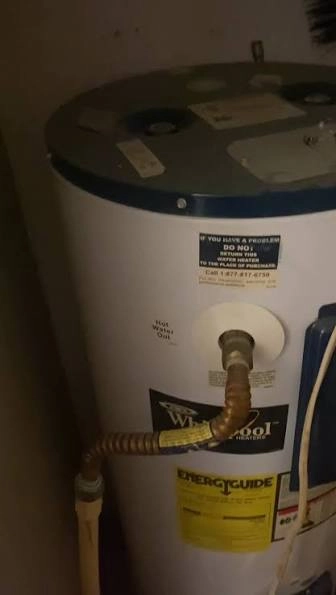
A water heater pops or rumbles because steam is forming underneath a layer of settled mineral sediment and forcing its way out. Water works its way beneath the sediment, the burner or lower element heats the steel floor above the flame, and that trapped water flashes to steam. Each bubble that punches up through the sediment layer makes the percussive knock you hear. The noise is the symptom. The sediment is the actual condition, and it is worth addressing because of what it does to the tank rather than because of how it sounds.
What Is Actually Happening Inside The Tank
Dissolved minerals come out of solution when water is heated, and they settle to the bottom of the tank because that is where gravity puts them. Calcium and magnesium compounds precipitate as the water warms and collect on the tank floor as a granular crust. On a gas unit, that floor is the exact surface the burner fires against. On an electric unit, sediment builds up around and eventually buries the lower heating element.
Once the layer is thick enough to hold water against the hot steel underneath it, that water superheats and flashes to steam. Steam occupies far more volume than the water it came from, so it forces its way up through the sediment bed and collapses into the cooler water above. That collapse is the pop. A rumble is the same event happening continuously across the whole tank floor rather than in isolated spots.
Why Gas Tanks Are Usually Louder Than Electric
A gas burner concentrates heat on the tank floor, which is precisely where sediment collects. That puts the heat source and the deposit in direct contact, and it makes gas tanks the noisier of the two. An electric tank heats from elements suspended in the water column instead, so sediment has to build high enough to reach the lower element before the same effect starts. Electric tanks tend to announce sediment later, and often through a burnt-out lower element rather than through noise.
Telling Popping Apart From Other Water Heater Sounds
Not every noise a water heater makes is sediment, and the distinction changes what to do about it. The sounds below are commonly confused with one another.
| Sound | Usual source | Urgency |
|---|---|---|
| Popping, knocking, rumbling | Steam escaping beneath sediment on the tank floor | Service, not emergency |
| Ticking or tapping | Pipe expanding and contracting against a strap or joist | Cosmetic |
| Screeching or whistling | Water forced through a partly closed valve or restricted line | Check valve positions |
| Banging on shutoff | Water hammer in the supply piping, not the heater itself | Plumbing, not the tank |
| Sizzling or hissing at the base | Water contacting a hot surface — possible leak | Investigate promptly |
| Humming | Electric element vibrating in the water column | Cosmetic |
The one on that list that should not be ignored is sizzling at the base of the unit. A leak dripping onto a burner assembly or hot surface makes that sound, and a leak at the bottom of a tank is a different and more serious diagnosis — covered in what a water heater leaking from the bottom means.
What The Sediment Is Costing You
The insulating layer is the real problem, not the noise. Sediment sits between the heat source and the water it is supposed to heat, so the burner runs longer to reach the same set temperature. That shows up three ways: more fuel or electricity consumed for the same amount of hot water, less usable capacity because sediment occupies volume the tank was designed to hold water in, and higher sustained temperatures in the steel at the bottom of the tank.
That last one is what shortens tank life. Steel that is repeatedly driven hotter than intended stresses the glass lining, and once the lining is compromised the tank corrodes from the inside. The U.S. Department of Energy puts the service life of a conventional storage water heater at 10 to 15 years. A tank carrying a heavy sediment load and an exhausted anode rod is working against the lower end of that.
Tank getting louder every heating cycle? Call (717) 500-8528 to have the sediment condition and anode rod assessed.
Schedule Service NowWhat To Do About A Popping Tank
The remedy is to remove the sediment by draining and flushing the tank, and then to keep it from rebuilding. How often that needs to happen depends on the unit and on the water feeding it, which is why the interval to follow is the one printed in your water heater's own manual rather than a number from a generic article. Manufacturers set the flushing schedule for their own equipment, and that schedule is what protects the warranty.
- Flush the tank on the schedule in the manufacturer's manual, shortened if the property's measured water conditions warrant it.
- Have the anode rod inspected at the same visit. The anode is the sacrificial component that corrodes so the tank does not, and it is checked while the tank is already open.
- Check the lower element on electric units. Sediment that has buried an element shortens its life and is often found alongside slow recovery.
- Test the temperature and pressure relief valve as part of the same service, since it is the tank's primary safety device.
- Have the water tested if sediment returns quickly. The conditions at a specific property are established by testing, not inferred from the surrounding area.
Full details of what a maintenance visit covers are on water heater maintenance and flushing in Lancaster, PA.
A Caution On Flushing An Older Tank
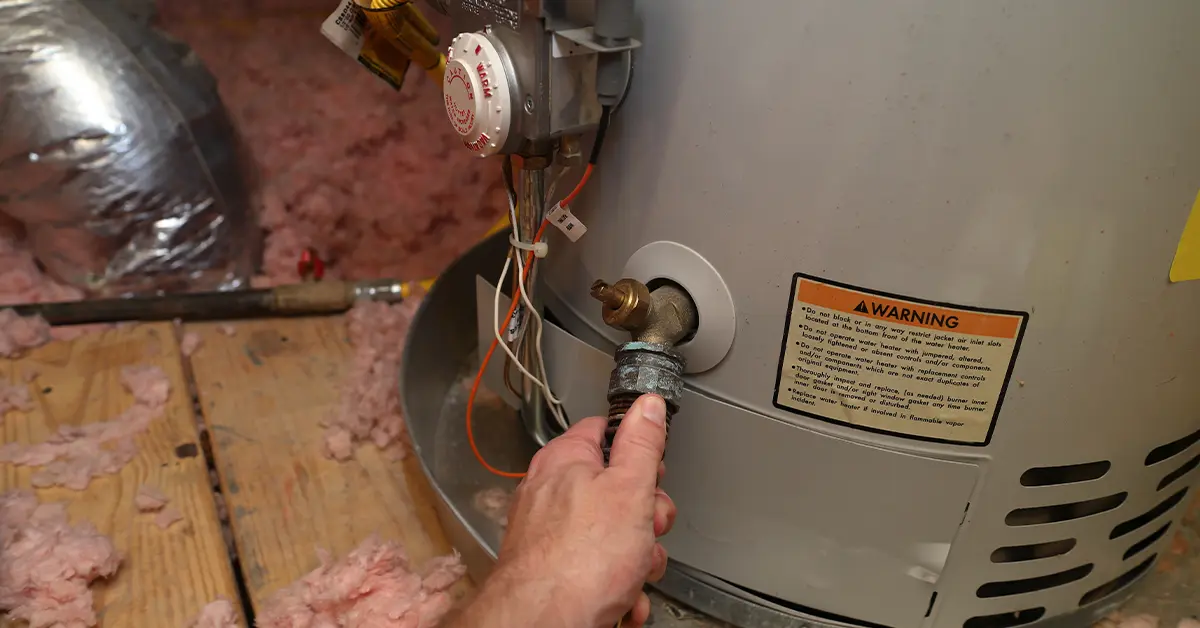
Flushing is straightforward on a tank that has been maintained and awkward on one that has not. Two things go wrong on neglected units. The drain valve, often plastic on older models, can fail to reseat once it has been opened for the first time in years, turning a maintenance task into a repair. And heavy sediment can pack the drain outlet solid, so the tank will not drain through it at all. Neither is a reason to skip maintenance; both are reasons to expect that a first flush on a long-neglected tank may find a problem rather than simply solve one.
The water inside is hot enough to scald. Any flush starts with shutting the unit down and letting it cool — the shutdown sequence is covered step by step in how to shut off your water heater in an emergency.
When The Noise Means Call Someone
Popping alone is a maintenance signal. Popping alongside any of the following is a service call.
- Rusty, brown or metallic-smelling hot water
- Moisture, staining or corrosion anywhere at the base of the tank
- A noticeable drop in how long the hot water lasts
- The relief valve discharging, whether intermittently or continuously
- A tank already past ten years old that has never been flushed
Any of those changes the question from "how do I quiet this down" to "how much life does this tank have left" — which is a diagnosis rather than a maintenance item. Water heater repair in Lancaster, PA covers how that assessment is made.
A popping water heater is telling you something useful. It is not an alarm, but it is a request for attention, and tanks that get that attention early tend to reach the far end of their expected service life rather than the near one.
Popping And Rumbling Water Heater FAQ
Is a popping water heater dangerous?
Popping on its own is not an emergency. It is steam escaping from under sediment, and a tank can make that sound for a long time before anything fails. What matters is what the sediment is doing underneath the noise — it insulates the tank floor, so the burner keeps firing into steel that is not shedding heat properly. A leak, a gas odor, or a relief valve discharging continuously are different matters and need immediate attention.
Does a popping noise mean my water heater is about to fail?
Not by itself. Popping tells you sediment has accumulated, not how much life the tank has left. Age is the better predictor: the U.S. Department of Energy puts conventional storage tank service life at 10 to 15 years. The noise becomes a replacement signal when it arrives alongside rusty water, moisture at the base of the tank, or a drop in hot water delivered.
Can I stop the popping myself?
Draining and flushing the tank is the standard remedy, and on an electric unit in good condition it is within reach of a confident homeowner. Two cautions: the water is hot enough to scald, so the unit must be powered down and allowed to cool first; and on a tank that has gone years without a flush, the drain valve is often the part that fails once disturbed. Follow the procedure and interval in your unit's own manual rather than a generic schedule.
Why does the noise get worse in the winter?
Incoming water is colder in winter, so the burner or elements run longer and hotter to reach the same set temperature. More heating time under the same sediment layer means more trapped steam and more popping. The sediment has not changed; the duty cycle has. A tank that is quiet in July and loud in January was already carrying the deposit.
Does a tankless water heater make popping noises?
Not in the same way. A tankless unit has no reservoir for sediment to settle in, so it does not produce the classic popping of a storage tank. It develops the related problem instead — scale forming on the heat exchanger, which shows up as reduced flow, temperature swings or an error code. See tankless water heater repair in Lancaster, PA.
Who can fix a noisy water heater near me in Lancaster?
Lancaster Water Heater Pros services gas, electric, tankless and hybrid water heaters across Lancaster City and Lancaster County. A noisy tank gets the sediment condition assessed alongside the anode rod, the burner or elements, and the relief valve, because the noise is usually a symptom of a maintenance gap rather than the fault itself. Call (717) 500-8528 to schedule. Service requests are accepted 24/7.